
At its best, garden design is about creating bespoke, handcrafted spaces that feel connected to their surroundings and bring enduring meaning and value to everyday life. Natural stone plays an important role in achieving exactly that.
A beautifully designed garden should feel as though it belongs to its surroundings – growing in character year after year. This sense of belonging is central to naturalistic design, a movement which is shaping residential landscapes across the UK. In our own client work throughout Hertfordshire, the Chilterns and surrounding areas, we are seeing homeowners increasingly choose gardens that favour movement, texture and wildlife‑friendly planting, supported by vernacular materials that suit the architecture and landscape. It’s a design trend that we particularly enjoy working with, as it allows us to create gardens that feel authentic, characterful and genuinely rooted in their setting.
Although these gardens often appear effortless, the reality is quite different. Behind every successful naturalistic garden is a carefully considered framework of hard landscaping – including terraces, paths and other built elements – that provides structure, usability and year‑round interest. Choosing the right materials is crucial, and natural stone has become one of the most popular choices for homeowners seeking a garden that will remain attractive for decades.
Creating a sense of place
The most memorable gardens feel as though they belong to their surroundings. Throughout the Chilterns, for example, limestone often complements the local chalk landscape, while Yorkstone remains a timeless choice that works beautifully in both traditional and contemporary settings. The goal is not to make the paving the star of the show; instead, it is about selecting materials that work in harmony with the architecture of the house, the surrounding landscape and the planting scheme. When these elements come together successfully, the garden feels balanced, authentic and rooted in its setting.
What is a naturalistic garden?
Naturalistic garden design aims to capture the beauty and character of nature while still providing all the functionality required for modern outdoor living. It blends ecological sensitivity with thoughtful structure, creating spaces that feel immersive, biodiverse and genuinely rooted in place.
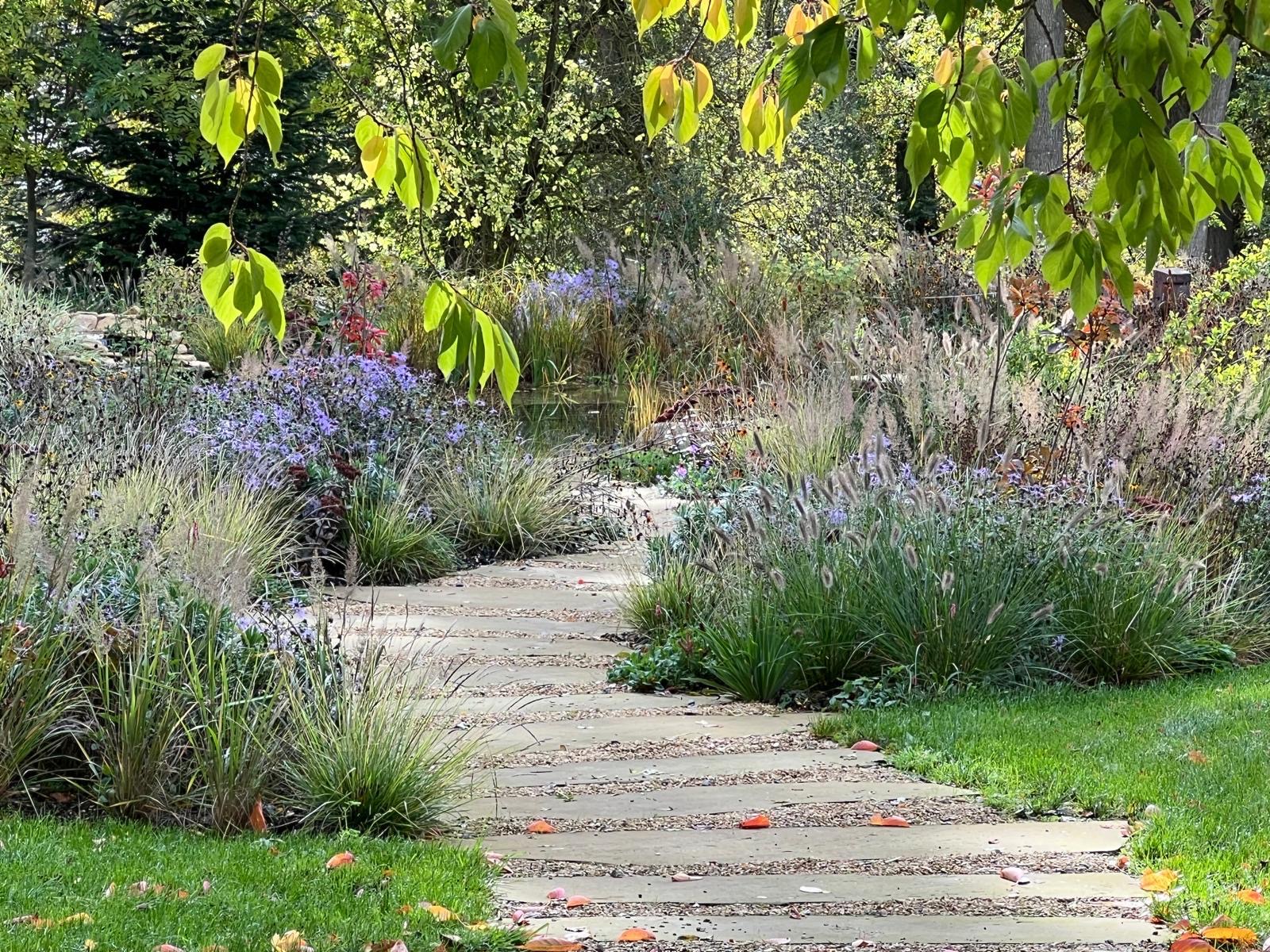
Rather than relying on formal layouts, clipped hedges or large expanses of paving, naturalistic gardens draw on design principles inspired by natural plant communities. They typically combine:
- Layered planting schemes that mimic the vertical structure of meadows, woodlands or grasslands
- Ornamental grasses and perennials chosen for movement, texture and seasonal interest
- Wildlife‑friendly planting that supports pollinators and increases ecological value
- Seasonal colour and texture to ensure the garden evolves throughout the year
- Informal pathways that encourage exploration and soften the overall layout
- Natural materials that reinforce a sense of place and visual harmony
- Biodiversity‑focused design that integrates habitat creation into the aesthetic
The result is a garden that feels relaxing, atmospheric and closely connected to the landscape around it. For a deeper look at the benefits of naturalistic gardens, read our dedicated blog post.
For many homeowners, naturalistic gardens offer an ideal balance of beauty and practicality. They provide opportunities to support wildlife, enjoy nature at close quarters and experience a garden that changes subtly – and often spectacularly – with the seasons. They are also more climate-resilient: diverse planting communities tend to be more adaptable to changing weather patterns and require less intensive maintenance than traditional design schemes. For those interested in exploring the concept further, The Royal Horticultural Society has an excellent guide to prairie-style planting, one of the most influential forms of naturalistic planting design.
Why structure still matters
One of the biggest misconceptions about naturalistic gardens is that they contain very little hard landscaping. In reality, every successful garden needs a strong underlying structure. Terraces create spaces for dining and entertaining. Paths guide movement through the landscape. Seating areas encourage moments of pause and reflection. Focal points draw the eye and provide destinations within the garden. Without these elements, even the most beautiful planting scheme can feel disconnected.
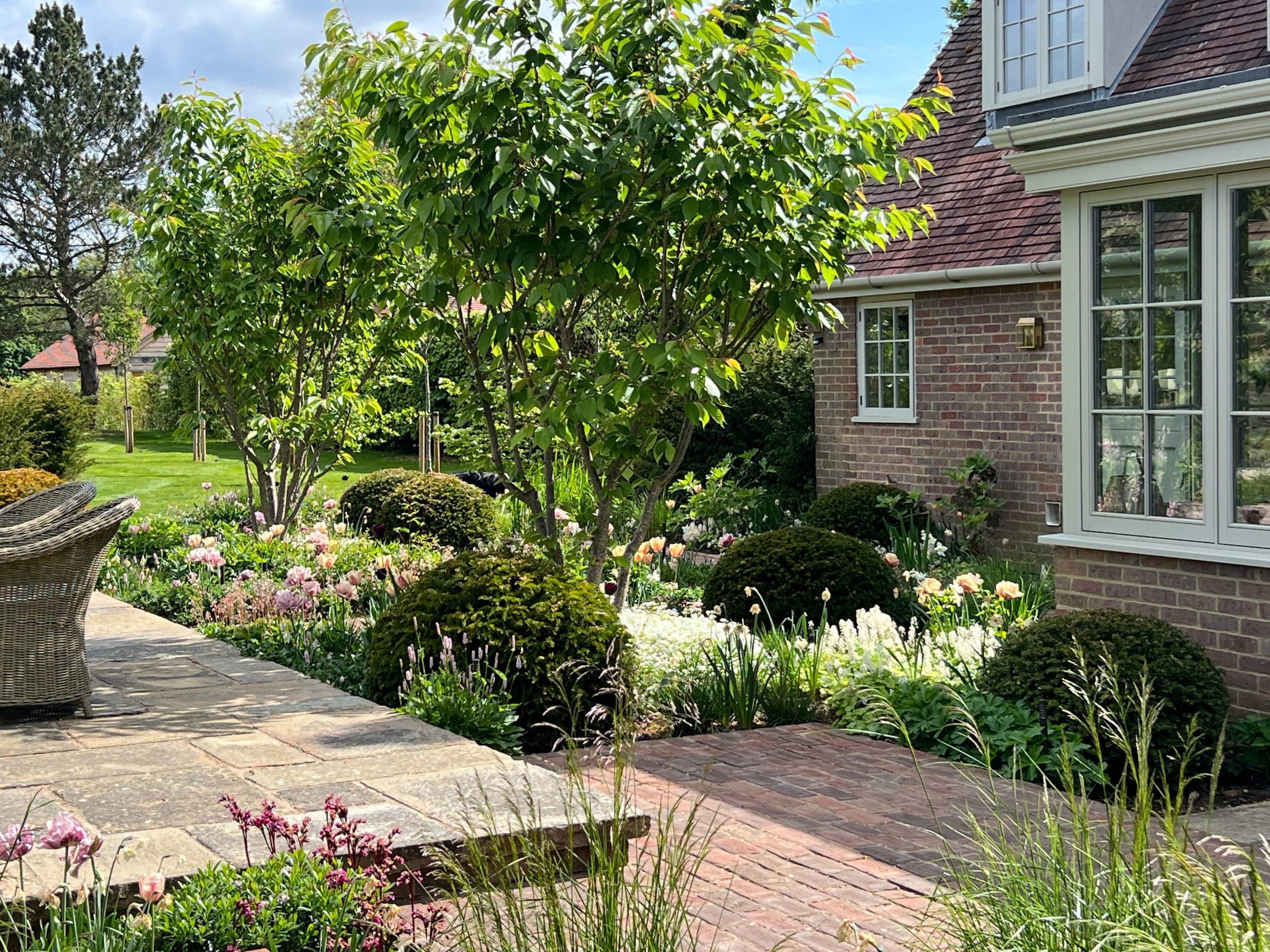
The difference is that in a naturalistic garden, hard landscaping takes a quieter role. Rather than becoming the dominant feature, it supports and enhances the planting around it. A dining terrace, for example, only needs to be large enough to accommodate its intended purpose. By allowing planting to flow around its edges and soften its boundaries, the terrace becomes part of the landscape rather than a separate element.
Why natural stone works so well
As planting becomes more expressive and natural, hard landscaping needs to be calm, understated and enduring. Natural stone is particularly effective because it offers a level of authenticity that manufactured materials often struggle to replicate. Its subtle variations in colour, texture and character help it sit comfortably within planting-led gardens, creating a harmonious relationship between hard and soft landscaping.
Natural stone also ages beautifully. Over time, it develops a natural patina that enhances its character and helps it blend even more comfortably into the landscape. Rather than looking tired or dated, it often becomes more attractive as the years pass. While planting evolves and changes with the seasons and over the years, the stone provides a dependable framework that anchors the entire design.
Creating natural stone terraces that feel part of the garden
In contemporary garden design, terraces should feel integrated into the wider landscape rather than isolated from it. One of the most effective ways to achieve this is by surrounding paved areas with generous planting. Introducing planting pockets within terrace layouts and allowing borders to soften edges helps create a seamless transition between hard and soft landscaping.
The result is a more immersive experience, where planting and paving work together rather than competing for attention. This approach often creates a garden that feels larger, more natural and more welcoming, while still providing all the practical benefits of a well-designed outdoor living space.
The importance of pathways
Naturalistic gardens are designed to be experienced from within, providing a sense of immersion. Thoughtfully designed pathways encourage exploration and reveal the garden gradually, creating a sense of discovery as you move through the space.
A path might lead to:
- A secluded seating area
- A specimen tree
- A sculpture or water feature
- A wildlife pond
- A fire pit
- A garden studio or home office
Every route should serve a purpose while enhancing the experience of being in the garden. Natural stone paths work particularly well because they provide clear direction and durability while maintaining a natural appearance that sits comfortably alongside planting.
Sustainability
Sustainability should be an important consideration in every garden project. Where possible, reusing existing materials, retaining original features and sourcing stone responsibly can help reduce environmental impact while preserving a garden’s unique character.
However, sustainability is about more than selecting a particular material. It is about creating gardens that are built to last. A well-designed landscape that remains functional, attractive and durable for decades is often a more sustainable choice than one requiring regular replacement or renovation. Natural stone’s longevity makes it particularly valuable within this approach, offering beauty and durability that can be enjoyed for many years.
Why natural stone adds long-term value
The best gardens are not designed simply for the day they are completed! They are created to evolve, mature and become more and more beautiful over time.
This philosophy sits at the heart of our approach to garden design. We create bespoke, handcrafted spaces that bring enduring meaning and value, combining thoughtful design, exceptional planting and carefully chosen materials that can stand the test of time.
Natural stone is often viewed as a premium material, but it can also represent excellent long-term value. Because it is durable, timeless and capable of ageing gracefully, it frequently outlasts lower-cost alternatives. In naturalistic gardens, where hard landscaping is often used more selectively, investing in high-quality materials can have a significant impact on the overall appearance, longevity and enjoyment of the space.
Creating gardens with lasting meaning
The most successful gardens are much more than collections of plants and materials. They are places where families gather, children grow up, friends connect and everyday life unfolds. They provide opportunities to slow down, reconnect with nature and spend time outdoors.
That’s why every garden should be designed around the people who use it. A terrace should support the way you entertain. A pathway should lead somewhere worth discovering. A seating area should capture a beautiful view, afternoon sunshine or a favourite corner of the garden.
When naturalistic planting, thoughtful design and carefully selected natural stone come together, the result is a bespoke garden that feels deeply personal while remaining connected to the wider landscape. These are the handcrafted spaces that continue to deliver enjoyment, meaning and value for years to come.
Frequently asked questions about natural stone in naturalistic gardens
Is natural stone better than porcelain for a naturalistic garden? Both materials have their advantages, but natural stone generally creates a softer and more authentic appearance that complements naturalistic planting schemes particularly well.
Does natural stone require a lot of maintenance? Natural stone is typically low maintenance. Regular sweeping and occasional cleaning are usually enough to keep it looking its best.
Is natural stone suitable for contemporary garden design? Absolutely. Natural stone combines clean lines and durability with natural texture and character, making it an excellent choice for both modern and traditional gardens.
How long does a natural stone terrace last? When properly designed and installed, a natural stone terrace can last for several decades, making it one of the most durable hard landscaping options available.
Is natural stone a sustainable choice? Natural stone can be a sustainable choice when specified thoughtfully, particularly when durability, longevity and responsible sourcing are taken into account.
The images shown here were taken by James Scott and feature several gardens designed by James and his design team.