
I’ve spent my entire working life immersed in gardens and outdoor spaces – observing them, shaping them and, most importantly, understanding how they interact with the natural world. In my experience, the most successful gardens are those that work in harmony with nature rather than against it. That relationship between cultivated space and the wider ecosystem is where truly great garden design begins. This blog post explores the importance of pollinator-friendly garden design and the valuable role our gardens can play in supporting biodiversity.
Many readers will already appreciate the importance of creating wildlife-friendly spaces. My aim is to deepen that understanding, reinforcing key principles while sharing practical ideas that can be applied in gardens of any size. Whether you are tending a compact urban courtyard or managing a larger rural landscape, there are always opportunities to make a meaningful environmental impact through thoughtful garden design and planting choices.
Wildlife in the UK and your garden
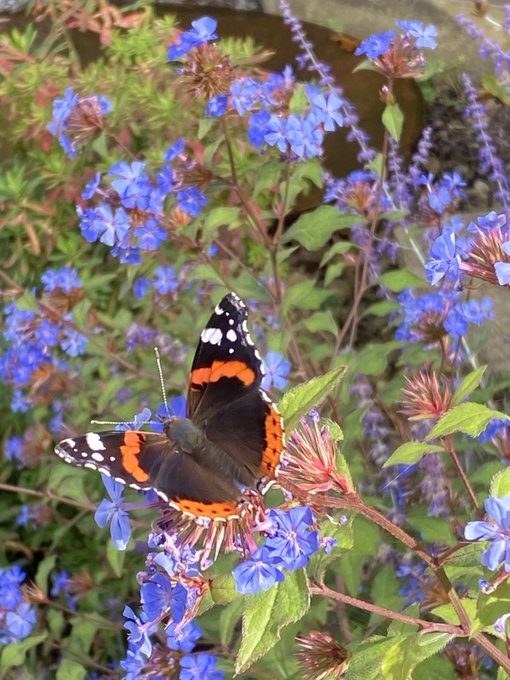 Across the UK, gardens collectively span around 10 million acres. That’s not just an interesting statistic; it represents an extraordinary, interconnected network of green corridors linking towns, cities, parks and open countryside. These corridors are essential. They allow wildlife to move, feed, breed and shelter safely in an increasingly fragmented landscape.
What’s often overlooked is just how rich and diverse UK wildlife remains. From birds and mammals to insects and amphibians, species continue to adapt and survive not only in rural settings but within our towns and villages too. And at the heart of that resilience lies one simple truth: every single garden matters.
As a garden designer, I see it as both a responsibility and a privilege to create spaces that actively support biodiversity. A well-designed garden doesn’t just look beautiful – it functions as part of a wider ecological system. When wildlife becomes a central consideration rather than an afterthought, your garden transforms into something far more meaningful: a living, breathing habitat.
Why supporting pollinators matters
Wildlife in the UK – and globally – is under increasing pressure. Over the past 50 years, we have seen dramatic declines in once-common species such as skylarks and water voles, while habitat destruction continues to threaten wildlife worldwide.
Closer to home, however, some of the most important and vulnerable species are much smaller: our pollinators. Bees, in particular, are fundamental to healthy ecosystems. By transferring pollen between flowers, they enable plants to reproduce, supporting biodiversity across both natural landscapes and cultivated gardens. Without pollinators, many of the plants we depend on simply could not survive.
Modern agricultural practices have intensified the problem. Large-scale monocropping can create short bursts of abundant pollen, followed by long periods with little or no food source for pollinators. In some parts of the world, bee colonies are now transported huge distances to pollinate crops such as citrus fruits and avocados – a clear sign of how fragile these systems have become.
The implications reach far beyond our gardens. Pollinators play a vital role in producing many of the foods we rely on every day, including fruits, vegetables, nuts, and oilseed crops. Their decline affects not only biodiversity, but also the resilience of our wider food systems.
Yet there is genuine reason for optimism. Pollinator-friendly garden design allows all of us to make a meaningful contribution, however small our outdoor space may be. By creating gardens rich in nectar, habitat and seasonal planting, we can actively support biodiversity while also enriching our own environment. A garden alive with bees, butterflies and birds brings movement, sound and seasonal change into daily life – creating a dynamic, sensory experience that no purely ornamental space can truly replicate.
Understanding bees’ lifecycles and needs
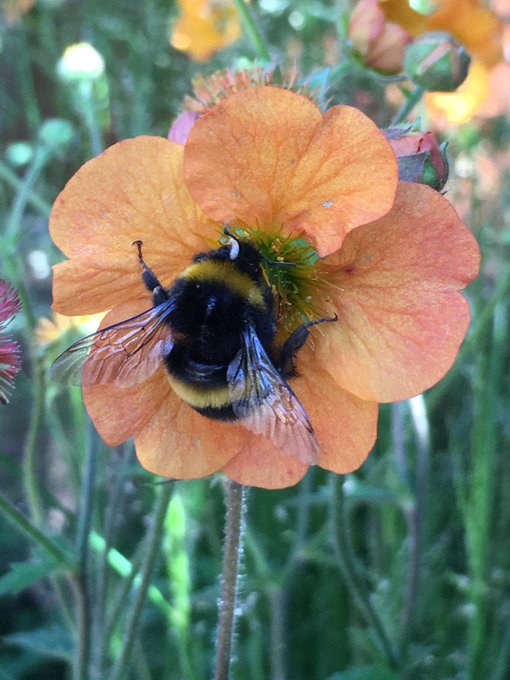 When it comes to supporting pollinators in your garden, it’s important to understand that not all bees are the same. In the UK, most gardens encounter three broad types: honey bees, bumblebees, and solitary bees. Each plays a unique role in pollination, and designing with all three in mind ensures a truly thriving ecosystem.
- Honey bees are perhaps the most familiar. These highly social insects live in large colonies and remain active for much of the year. As generalist foragers, they visit a wide range of flowers, requiring a consistent and abundant food supply to sustain their numbers. While their role in agriculture—pollinating fruits, vegetables, and nuts—is indispensable, honey bees also benefit enormously from diverse garden planting, where a variety of flowers ensures their colonies thrive.
- Bumblebees, by contrast, form smaller colonies that are active primarily from spring through to late summer. They are particularly adept at “buzz pollination,” a fascinating technique that allows them to release pollen from flowers that honey bees struggle with, such as tomatoes and peppers. Bumblebees often favour larger flowers or clusters, and their presence is a strong indicator of a healthy, well-balanced garden ecosystem.
- Solitary bees are often overlooked, yet they are among the most effective pollinators. Unlike honey or bumblebees, each female constructs and provisions her own nest, often in soil, hollow stems, or small crevices. Solitary bees work quickly, visiting large numbers of flowers in a short period, and many species specialise in particular plants. Their efficiency makes them critical for both garden flowers and wild plants alike.
These three categories provide a practical framework for understanding bee diversity in a garden context. In reality, the UK is home to over 250 species of bee, including cuckoo bees and other specialists. By designing your garden to support these three types, however, you cover the vast majority of pollinators and create a stable, year-round habitat that encourages biodiversity.
Supporting them means providing both food and shelter. A succession of flowering plants from early spring through late autumn ensures bees always have nectar and pollen. Potential nesting sites – bare soil, hollow stems, or well-placed bee houses – offer safe places to live and reproduce.
When you plan your garden design with these needs in mind, your garden becomes more than a visually appealing space. It transforms into a vibrant, living ecosystem that supports pollinator health, strengthens biodiversity, and even contributes, in its own small but meaningful way, to global food security. Importantly, this isn’t an abstract ideal – it’s entirely achievable.
Designing with nature’s calendar in mind
One of the most overlooked principles in pollinator-friendly garden design is timing. It is not simply about what you plant, but when those plants flower. Pollinators – particularly bees – are active for far longer than many people realise. In the UK, queen bees can emerge as early as February or March, often while the garden still appears dormant. From that point onwards, colonies require a continuous and reliable supply of nectar and pollen to build strength throughout spring and summer. Later in the year, autumn-flowering plants become equally important, helping pollinators build the reserves needed to survive winter.
The real issue is continuity. A garden that peaks beautifully in early summer but offers little before or after may succeed visually while failing ecologically. Gaps in flowering create gaps in food supply – and for pollinators, those gaps can have serious consequences.
In natural ecosystems, flowering happens in sequence, creating an ongoing relationship between plants and the insects that rely on them. Good garden design should aim to recreate that rhythm, ensuring the garden functions as a living ecosystem rather than a series of isolated seasonal moments.
Creating a continuous supply of nectar
Pollinator-friendly garden design provides a steady succession of flowering from the first signs of spring through to late autumn. Early-flowering plants such as snowdrops and crocus are especially valuable, providing one of the first nectar sources for emerging bees at a time when little else is available.
As the season develops, mid-season planting takes over. Lavender, salvia and verbena combine strong ornamental qualities with high ecological value, attracting bees, butterflies and hoverflies while adding colour, movement and fragrance to the garden. This is often where aesthetics and biodiversity work most naturally together.
Later in the year, when many gardens begin to lose momentum, late-season performers become critical. Plants such as ivy, aster and sedum provide an essential source of nectar and pollen well into autumn, extending the feeding season at a vital time.
 Front gardens also have an important role to play within this approach. In urban areas especially, even modest front garden planting can become part of a wider ecological corridor, helping pollinators move through densely built environments. By incorporating layered, successional planting into these spaces, gardens can contribute both to the visual quality of the streetscape and to local biodiversity resilience.
Layering planting for resilience and habitat
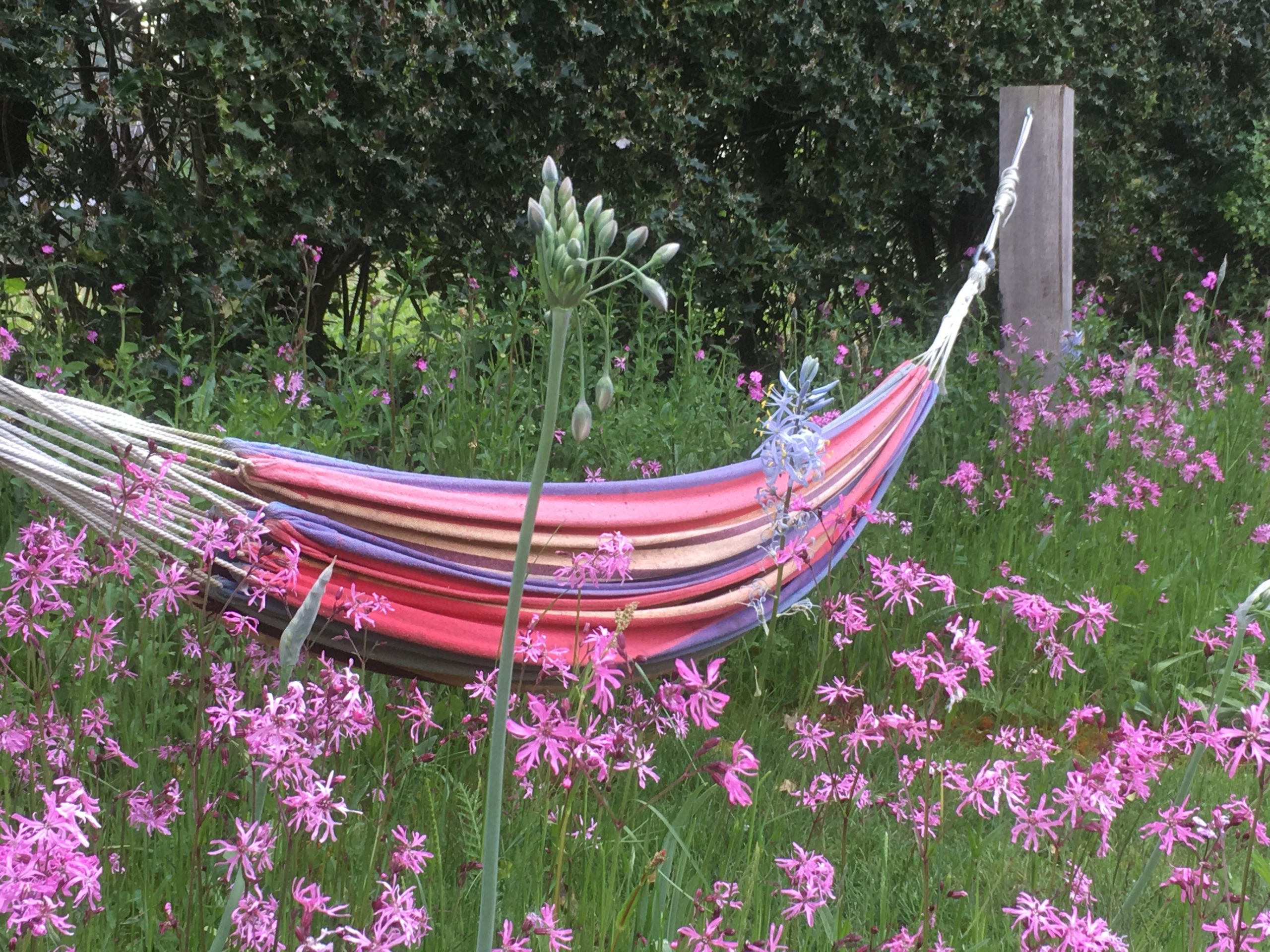 At the heart of this approach is successional flowering – the careful selection of plants so that something is always in bloom. While the principle itself is straightforward, achieving it successfully requires thoughtful planning and layering.
In practice, this means combining different types of planting to create both seasonal continuity and ecological resilience. Bulbs can be naturalised beneath perennials, emerging early before surrounding planting reaches its full height. Shrubs add structure and longer periods of interest, while climbers increase habitat and nectar availability vertically without requiring additional ground space. Trees provide a longer-term framework, supporting everything from early pollen sources to nesting opportunities.
Evergreen planting also plays an important supporting role. Although evergreen shrubs may not always provide direct food sources, they offer year-round shelter and protection for wildlife, helping the garden function as a stable habitat throughout the seasons.
Small gardens can make a BIG difference
With pollinator-friendly garden design, size is no barrier to success. Even the smallest garden, courtyard, balcony or terrace can make a meaningful contribution to biodiversity when designed thoughtfully.
When I work on small gardens, one principle always guides the design process: every inch of space counts. With careful planning and the right planting choices, compact outdoor spaces can become vibrant wildlife havens that support pollinators throughout the year while also creating beautiful, sensory-rich gardens for people to enjoy.
Small gardens often present creative challenges, but they also offer exciting opportunities to maximise planting, introduce seasonal interest, and strengthen local ecological networks. Here are some simple tactics for a small garden:
- Use containers to increase planting space
Containers are very valuable in small pollinator-friendly gardens. They allow you to introduce layers of planting even where ground space is limited, helping to provide nectar and pollen sources across a longer flowering season. Herbs such as thyme, oregano, mint and chives are particularly beneficial for pollinators. Compact flowering perennials can bring colour, fragrance and biodiversity into even the smallest spaces. Thoughtful container planting also helps fill seasonal gaps, ensuring pollinators can find food sources over a much longer period. - Include early and late flowering trees and shrubs
Trees and shrubs that flower very early or very late in the year are especially valuable because they support pollinators when food sources are scarce. Witch hazel, for example, provides early-season interest, while Heptacodium offers valuable late nectar for insects preparing for winter. Even a single well-chosen tree or shrub can make a significant ecological contribution in a small garden. - Think beyond your garden boundaries
Every garden forms part of a much larger ecological picture. Pollinators rely on connected green spaces to move safely through towns, cities, and residential neighbourhoods. Thoughtful planting in small gardens can help bridge gaps between parks, street trees, neighbouring gardens, and larger wildlife corridors. In this way, even a balcony garden or a few carefully planted containers can contribute to a wider network of pollinator-friendly habitats.
Wellbeing, performance and lasting value
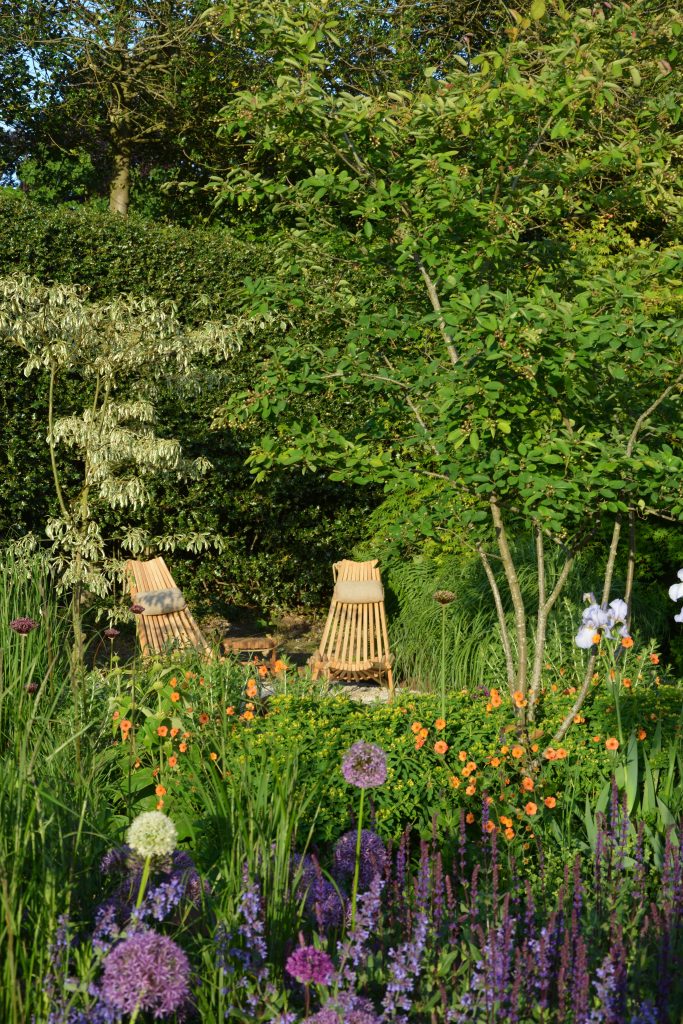
A pollinator-friendly garden design offers far more than visual appeal. It works hard for you in multiple ways, including:
-
Supporting wellbeing at every age
Gardens can engage all the senses. Movement, sound, seasonal fragrances and changing colours all contribute to a sense of connection with nature. For adults, gardens can provide restorative spaces for relaxation and entertaining. For children, they become places of curiosity and discovery. Butterflies, bees, birds and other wildlife all create moments of excitement and wonder. The presence of pollinators and wildlife transforms a garden into something immersive and emotionally engaging, rather than simply decorative.
-
Serving as a form of living, performing art
Unlike static spaces, gardens evolve constantly with the seasons, weather, and wildlife activity. The planting creates the structure and atmosphere, but it is the interaction between plants and pollinators that truly brings a garden to life. A bee settling onto a lavender flower, butterflies moving through perennial borders, birds feeding among seed heads in autumn – these small moments create movement, rhythm, and energy within the space. A successful pollinator-friendly garden is never still. It is dynamic, evolving, and full of life.
-
Adding long-term value to your home
Creating a wildlife-friendly garden is not only an investment in nature; it is also an investment in your property. There is growing appreciation for gardens that feel natural, sustainable, and environmentally responsible. Well-designed outdoor spaces with strong planting, mature habitats and ecological value are increasingly desirable to homeowners and buyers alike. At The Garden Company, this approach aligns closely with our design ethos. I have always believed in planting more and hard landscaping less wherever possible. By using materials carefully and responsibly we can maximise the environmental value of the space.
More ideas for a pollinator-friendly garden
You do not need to completely redesign your garden to make a positive difference for wildlife. Often, small changes implemented consistently over time have the greatest impact. Here are a few additional ‘top tips’ that can significantly enhance biodiversity in your garden:
-
Add water sources
Wildlife-friendly gardens benefit enormously from accessible water. A shallow birdbath, small pond, or gently moving water feature can support birds, pollinators, amphibians, and beneficial insects. Even a simple water source can dramatically increase biodiversity within a garden.
-
Changes to garden maintenance routines
Small adjustments can make a substantial ecological difference. Allowing lawns to grow slightly longer, delaying mowing, and leaving seed heads standing through autumn and winter all provide shelter and food for wildlife. Reducing chemical use also encourages beneficial predators such as ladybirds, frogs, and hedgehogs to thrive naturally within the garden ecosystem.
-
Create shelter for wildlife
Wildlife needs safe places to nest, shelter, and overwinter. Bee hotels, bird boxes, log piles, brush piles, and compost heaps all provide valuable habitat for insects, birds, hedgehogs, and small mammals. These features can be incorporated beautifully into garden design while quietly supporting biodiversity behind the scenes.
Conclusion
Ultimately, pollinator-friendly garden design is about creating gardens that feel truly alive. Such spaces support nature while enriching our everyday lives. Every thoughtful planting choice, every additional flower and every small habitat created contributes to something much bigger. Small changes really can make a lasting difference.
For your own garden, the approach does not need to be complicated. Think in terms of continuity rather than short-lived display. When this is done well, the result is a garden that does not simply look alive at certain times of year, but one that actually is constantly evolving, constantly active and continually supporting the intricate web of life that depends upon it.
From a design perspective, this creates an added richness. A garden designed around nature’s rhythms develops a strong sense of progression and narrative. It unfolds and responds to the changing seasons. Rather than a space to admire, it becomes a space to experience. That, ultimately, is where the real value lies.
At The Garden Company, we believe beautiful gardens and biodiversity should go hand in hand. We provide garden design services nationwide, alongside landscaping services within the Northern Home Counties and North London. We focus on helping clients to gain outdoor spaces that are both environmentally thoughtful and deeply enjoyable. Browse our residential portfolio for more examples of our work. And for further guidance on planning your own colour-themed planting combinations for attracting pollinators, take a look at this section of the RHS website.
This blog post is based on a presentation that James gave at Grand Designs Live in London in May 2026. The gardens shown were all designed by James, including the title image taken at The Long Garden, Cliveden, a recent National Trust project completed by James and his design team.