
Transforming a garden is an exciting prospect for many homeowners – a chance to reimagine your outdoor space and create something truly personal. One of the most enjoyable aspects of this process is choosing the plants that will bring your garden wishes to life. But while this can be fun, it’s also where many people run into difficulties. Without a strong understanding of planting design principles, it’s easy to fall into the trap of selecting plants that may look beautiful individually but clash or underperform when placed together. The result? A garden that feels chaotic, lacks cohesion or simply doesn’t thrive as intended. Even more frustrating, this often leads to wasted money on plants that aren’t suited to the space, don’t complement one another or fail to thrive in the local conditions.
A professional designer helps you avoid these costly mistakes by selecting plants that are not only visually harmonious but also appropriate for your soil, light levels and long-term maintenance needs. In this post, I’ll introduce you to the key design principles behind successful planting for a naturalistic garden. Naturalistic gardens are designed to reflect the beauty and structure of wild landscapes. They are based on plants that mimic those found in local ecosystems. Instead of formal layouts, these gardens embrace the organic, flowing shapes and patterns of nature. They often feature native plants, grasses, wildflowers and even small trees, arranged in harmonious drifts to create a sense of movement and balance.
Benefits of naturalistic gardens
The benefits of naturalistic gardens are numerous. They promote biodiversity by supporting local wildlife such as birds, insects and pollinators. These gardens are also more sustainable, as the plants are adapted to local soil and weather conditions, requiring less water, fertilizer, and maintenance. The natural beauty of these spaces offers an ever-changing landscape that evolves with the seasons, making it a low-maintenance yet high-impact way to enjoy your outdoor space.
In essence, a naturalistic garden is not just visually pleasing; it offers long-term environmental benefits while creating a beautiful, immersive outdoor retreat.
So – what are the best strategies for designing a naturalistic planting scheme?
TIP 1 – Start with a Restrained Plant Palette
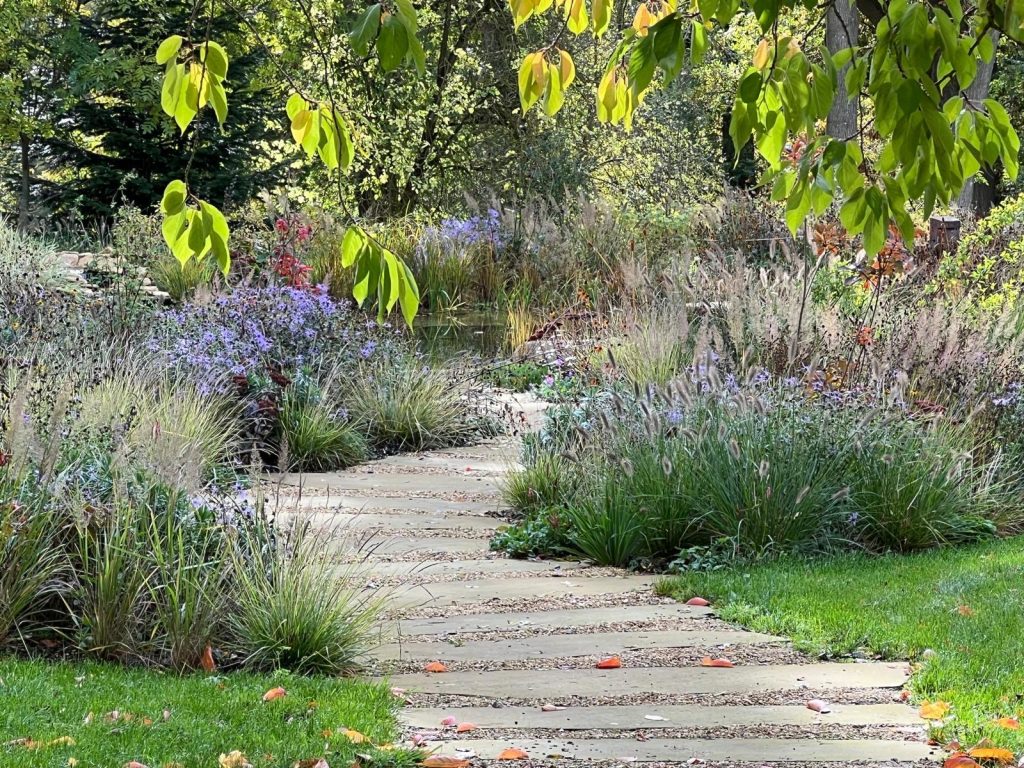
Less is more. Begin with a carefully curated selection of plant types that work in harmony. A successful naturalistic palette typically includes:
- Structural shrubs – for shape, form, and year-round presence
- Grasses – to add texture, movement, and height variation
- Flowering perennials – to introduce seasonal colour and softness
- Small trees – for vertical interest and to anchor the space
Limiting your plant palette allows for stronger visual rhythm and cohesion. Repeating key plants throughout the garden creates flow and a more immersive experience.
TIP 2 – Handle Colour with Care
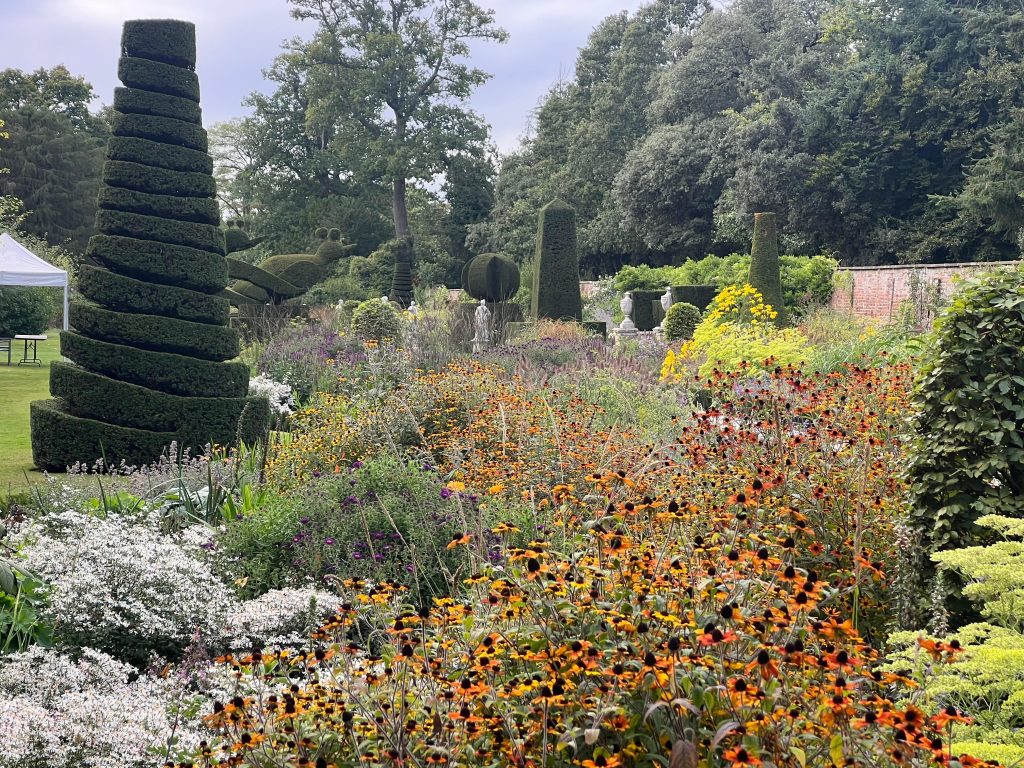
It’s tempting to fill a space with vibrant flowering plants, but restraint leads to better results. Too many colours can overwhelm the design and dilute the impact of plant shapes and textures. As a rule of thumb, it’s worth remembering that a well-planted garden will look good photographed in black-and-white all year round.
Focus instead on building a textural tapestry of greens, with carefully chosen colour highlights. Prioritise plants that provide interest across multiple seasons, rather than concentrating all the colour in summer. In smaller gardens especially, subtlety and seasonal succession have more impact than a single burst of bloom.
TIP 3 – Use Contrasting Shapes and Forms
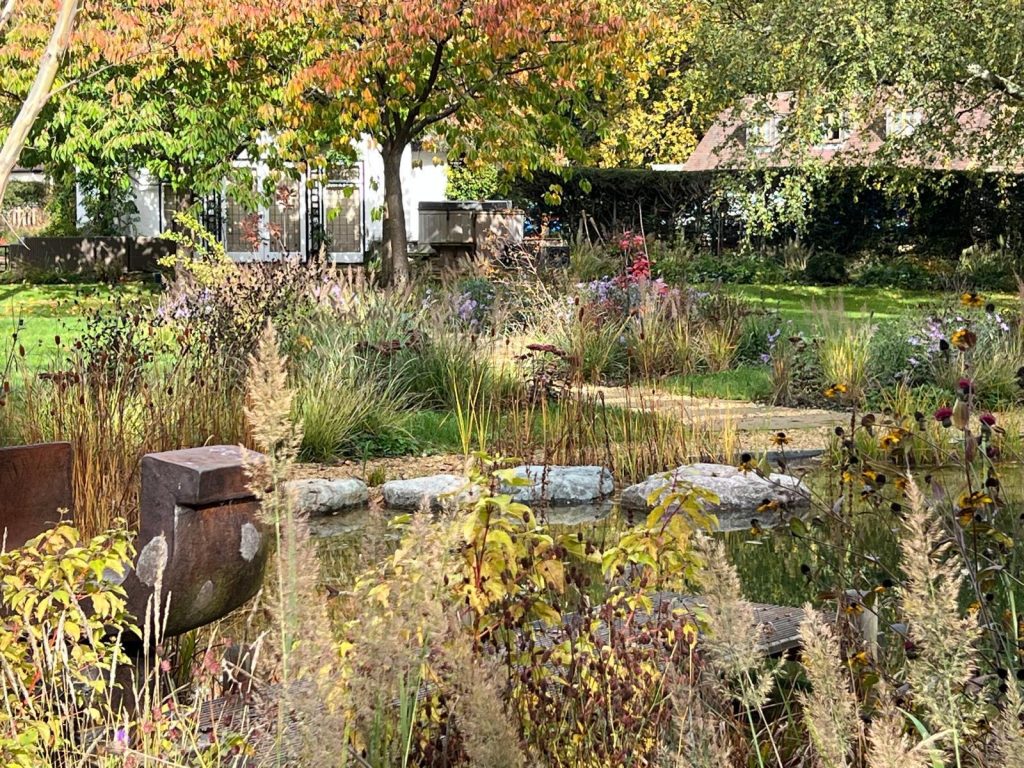
Think beyond colour – consider how plant shapes work together. Use contrasting forms to add interest and structure:
- Spikes – upright, dynamic accents (e.g. Salvia mainacht, Veronicastrum virginicum)
- Buttons – rounded flower heads or foliage (e.g. Allium, Sanguisorba)
- Tiered forms – layered, branching structures (e.g. Achillea, also Umbel flower structures)
- Soft, fluffy forms – plants that create volume and a gentle feel (e.g. Gypsophila)
This contrast adds depth and energy to the planting, even when colour is subdued.
TIP 4 – Layer for Long-Term Interest
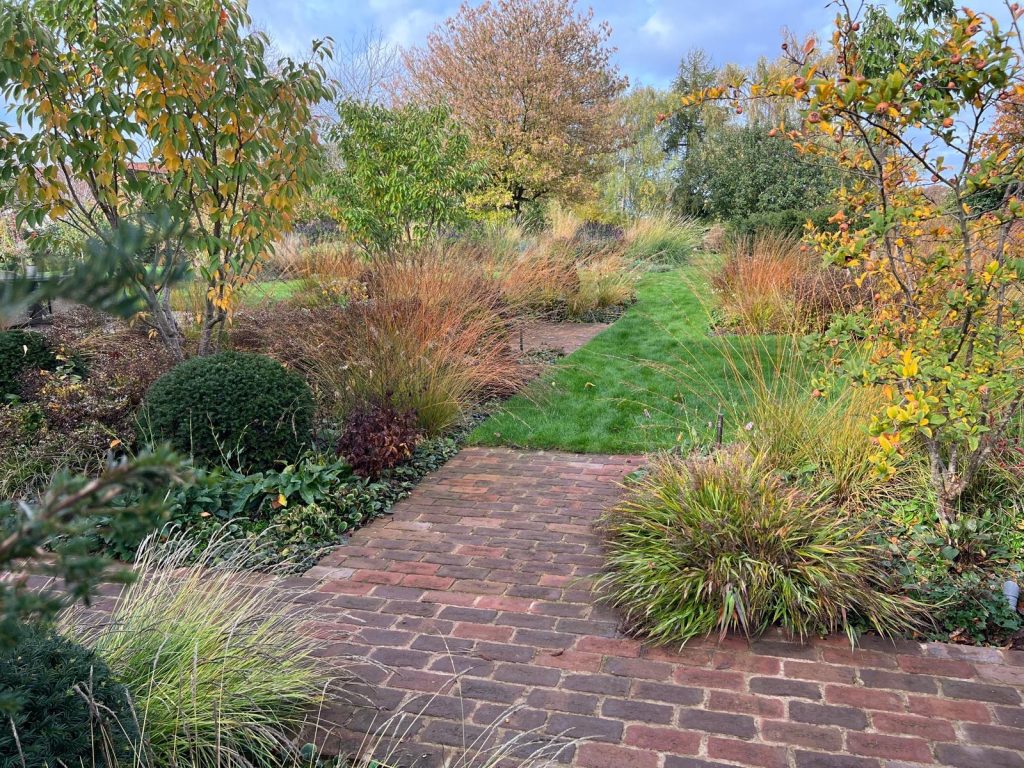
Plant in layers to maximise space and seasonal appeal. Each layer can take the spotlight at different times of year.
For example, underplant herbaceous perennials with woodland bulbs like snowdrops or cyclamen. These will emerge early in the year, before taller plants wake up. When you cut back perennials in spring, the bulbs provide a fresh, uplifting focus – ensuring that the garden always has something interesting to offer.
Other layering techniques include mixing groundcover, mid-height perennials and taller vertical accents to create depth and ensure year-round performance.
TIP 5 – Connect the Garden to Its Surroundings
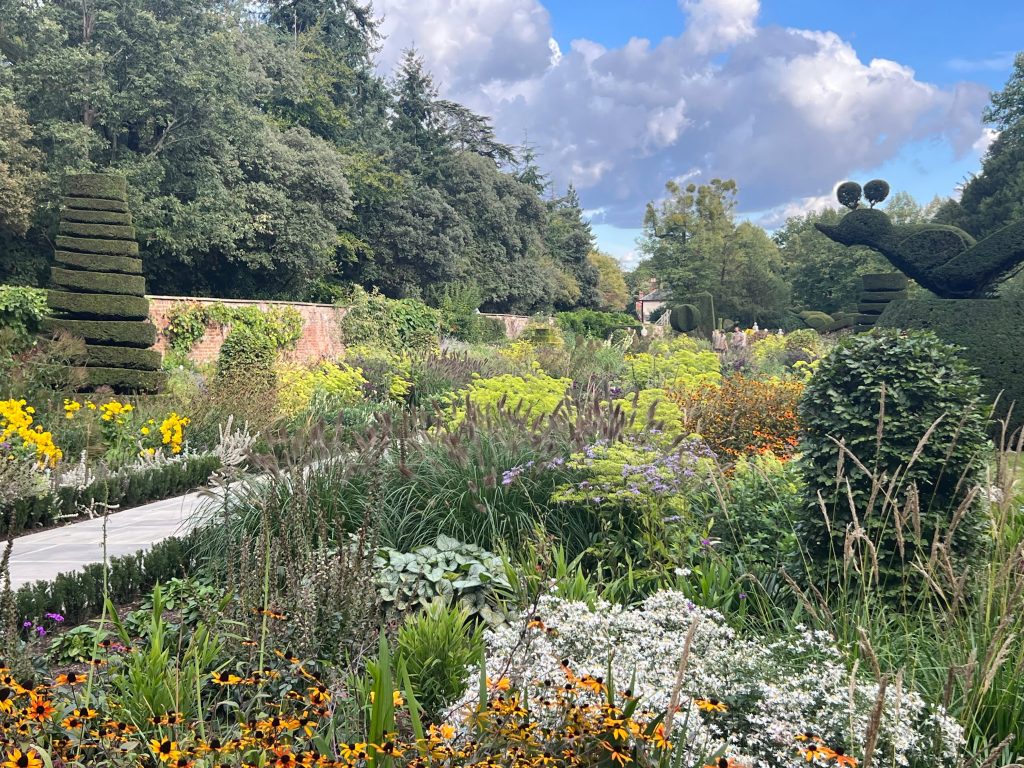
Generous planting borders make a garden feel bigger and more immersive. Narrow borders often highlight the boundaries of a space, while deeper beds draw the eye inward and allow for more layering and complexity.
Look for opportunities to visually link the garden to the surrounding landscape. For example, reflect distant trees with similarly shaped specimens within the garden, or use repeated elements – like topiary or grasses – to create rhythm that echoes what’s beyond your property line. Redesigning the National Trust’s Long Garden at Cliveden recently, we used repeated topiary forms to connect the new planting with the established layout.
Conclusion
In this post, I have walked you through some of the key principles behind successful planting design for a naturalistic garden – and hopefully shown you how working with a professional can elevate your garden from a collection of plants to a truly bespoke, handcrafted outdoor space. The focus here has been on softscaping; to find out more about hardscaping choices in naturalistic garden design, browse this blog post.
A skilled garden designer doesn’t impose their own tastes; instead, they collaborate closely with you to understand your lifestyle, preferences and aspirations. My personal goal when working with every client is to translate their garden wishes into a cohesive design that feels balanced all year round. With such guidance, your garden becomes more than just a space – it becomes a reflection of you, thoughtfully brought to life through expert planting design.
And if you are looking for inspiration … we are very lucky in the UK to have access to some stunning naturalistic gardens, here are some recommended places to visit:
- The Wildflower Garden at the RHS Garden Wisley (Surrey)
- The Eden Project (Cornwall).
- Hidcote Manor Garden (Gloucestershire)
- Kew Gardens (London)
- Great Dixter (East Sussex)
- Stourhead (Wiltshire)
- Hauser and Wirth (Somerset)
- Sissinghurst Castle Garden (Kent)
- Bodnant Garden (Conwy, North Wales)
- Aberglasney Gardens (Carmarthenshire, South Wales)
- The Royal Botanic Garden Edinburgh (Edinburgh)
- Cambo Gardens (Fife)
Not to forget the aforementioned Long Garden at Cliveden (Buckinghamshire). This was recently redesigned by myself and my design team, in collaboration with the National Trust.
The images included in this blog post are all taken from garden spaces designed by James Scott and his team at The Garden Company.